Hungaroring
Engineering precision in the renewal of Hungary’s iconic racing circuit
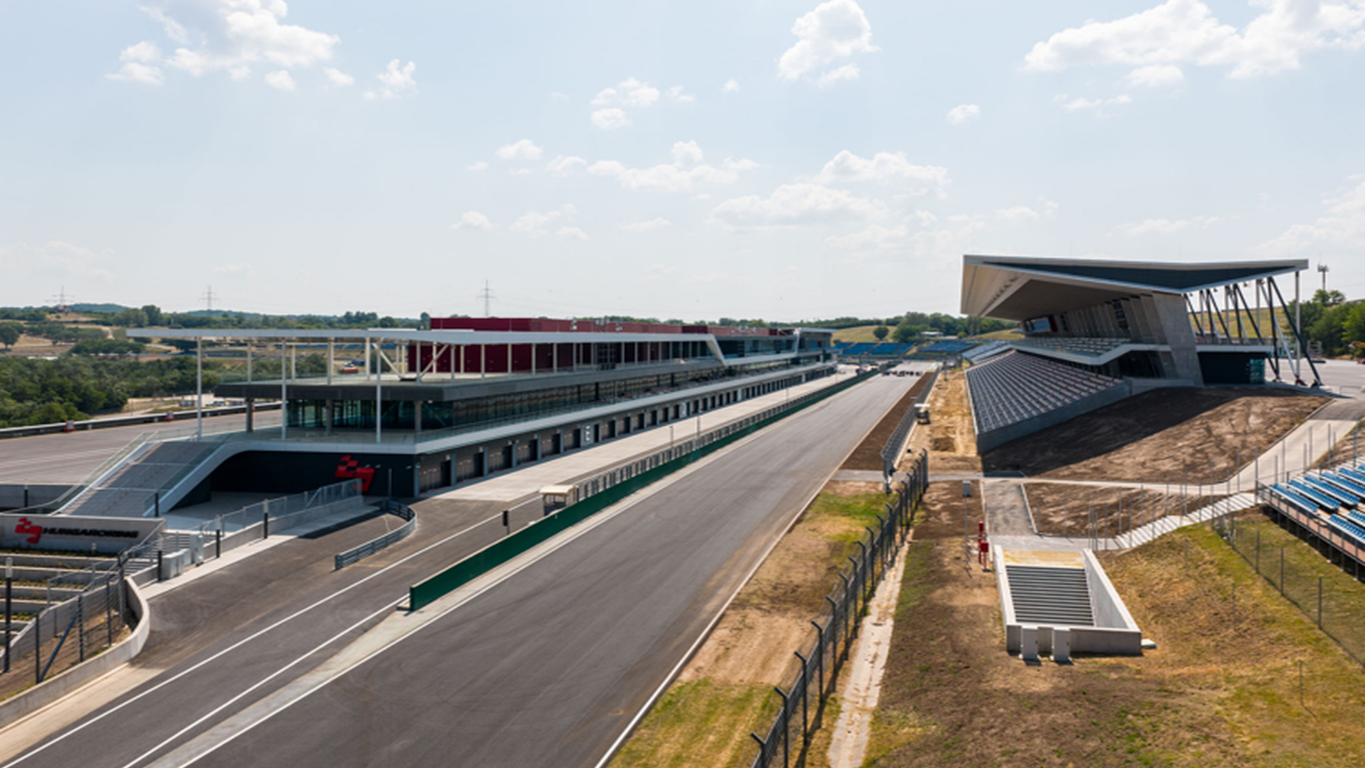
For almost four decades, the Hungaroring has been the most important international venue in Hungarian motorsport. Located near Mogyoród, the circuit is not only the home of the Formula 1 Hungarian Grand Prix, but also a major sporting and events destination that attracts international attention to Hungary every year. The modernisation programme was designed to ensure that the venue’s infrastructure continues to meet the increasingly complex technical, safety, media and hospitality requirements of contemporary motorsport. The development included the renewal of paddock areas, service buildings, grandstand zones and the associated public spaces.
Construction design and fabrication detailing of cladding and supporting substructures
Client / developer: Hungaroring Sport Zrt.
Award: International Architecture & Design Awards – Gold Winner
More than a sporting investment
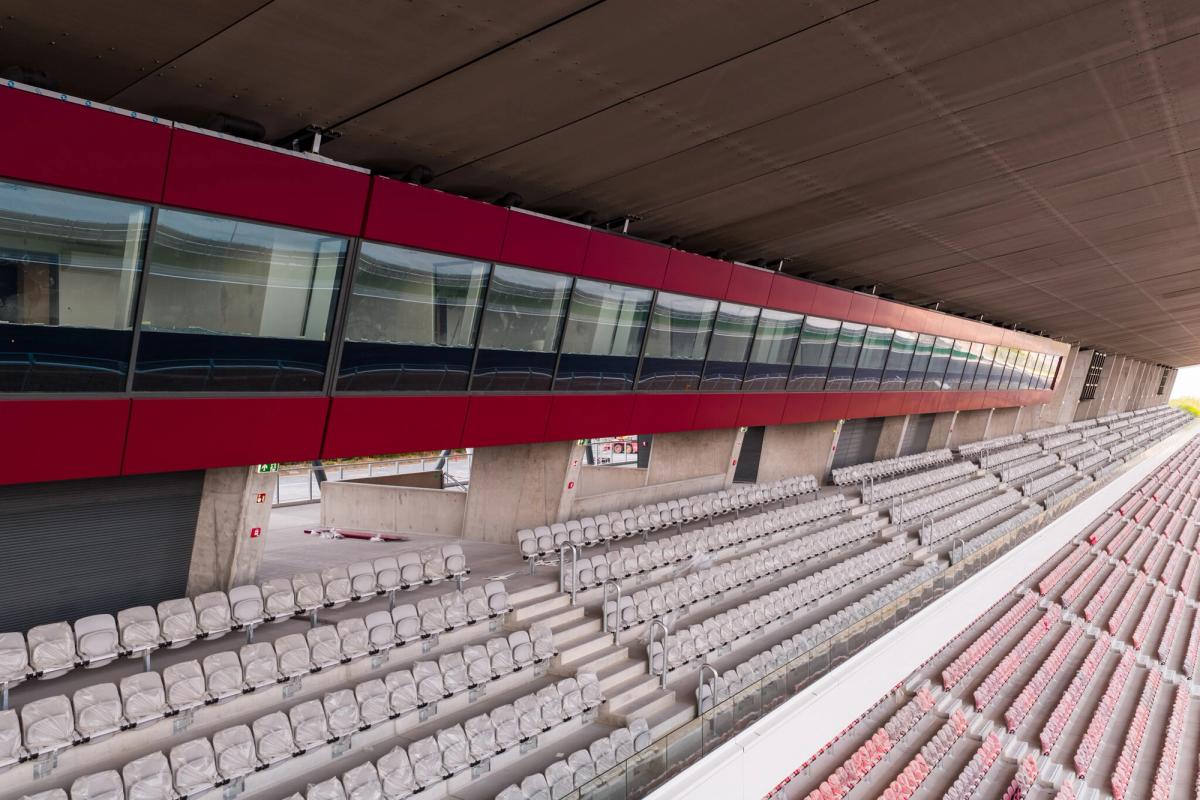
The international role of the Hungaroring is also significant for Mogyoród and the wider Budapest region. Race weekends attract tens of thousands of visitors, supporting hotels, restaurants, transport providers and businesses involved in event operations. The development is therefore not only about the future of Formula 1 in Hungary. It strengthens the international visibility of the country, supports the reputation of Hungarian motorsport and creates modern infrastructure that can also serve other events outside the main racing calendar.
The role of bim.GROUP
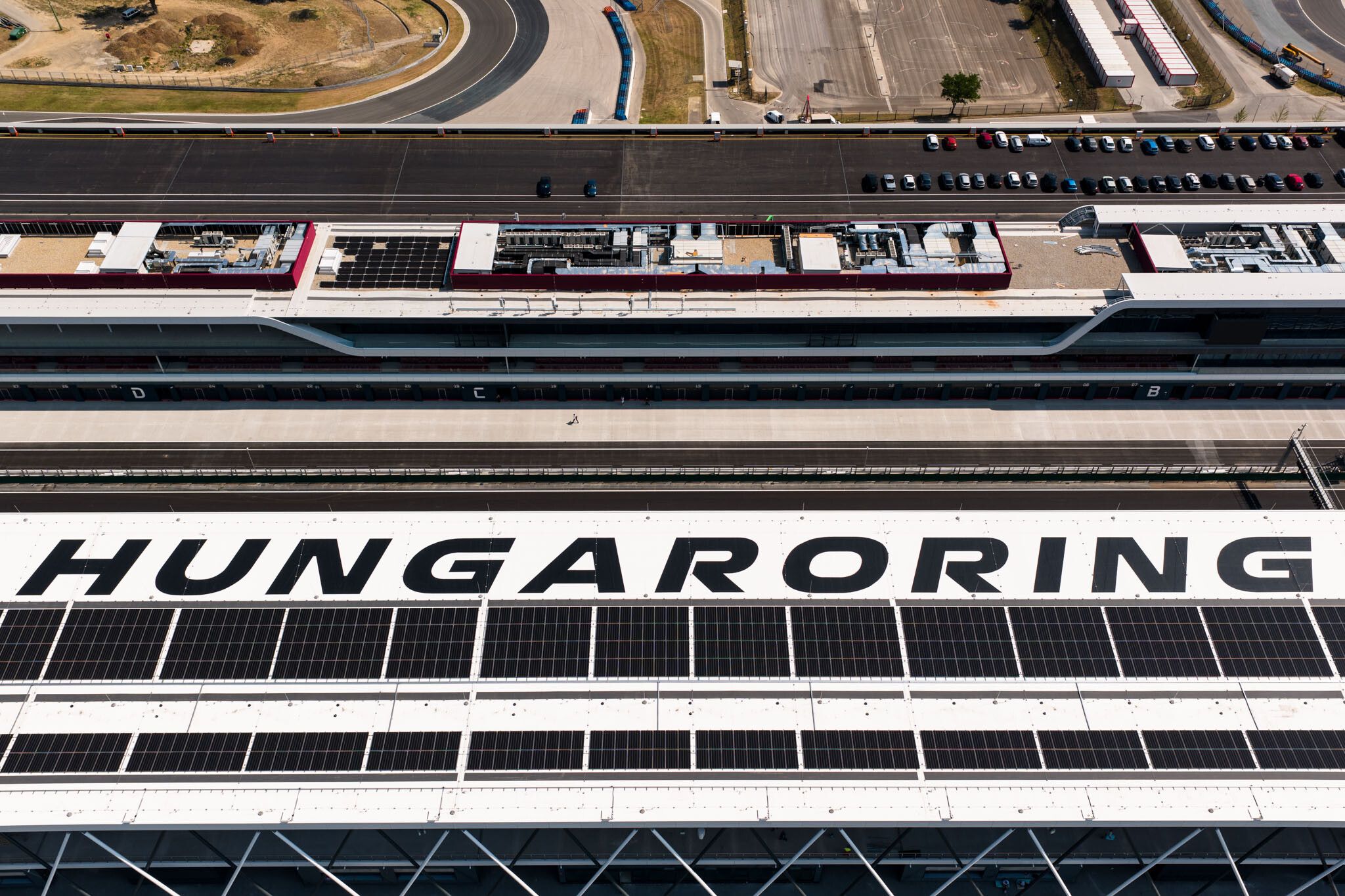
bim.GROUP was responsible for the construction design of the cladding systems and their supporting substructures, together with the preparation of fabrication documentation. The architectural concepts had to be translated into detailed technical solutions that could be manufactured accurately and installed efficiently. The design scope included panel layouts, supporting structures, fixing points and project-specific connection details. The visible surfaces and the structures behind them had to function as a single coordinated system. In addition to architectural appearance, the design needed to ensure stability, durability, maintainability and resistance to the demanding conditions of an intensively used international event venue.
Design working at racing speed
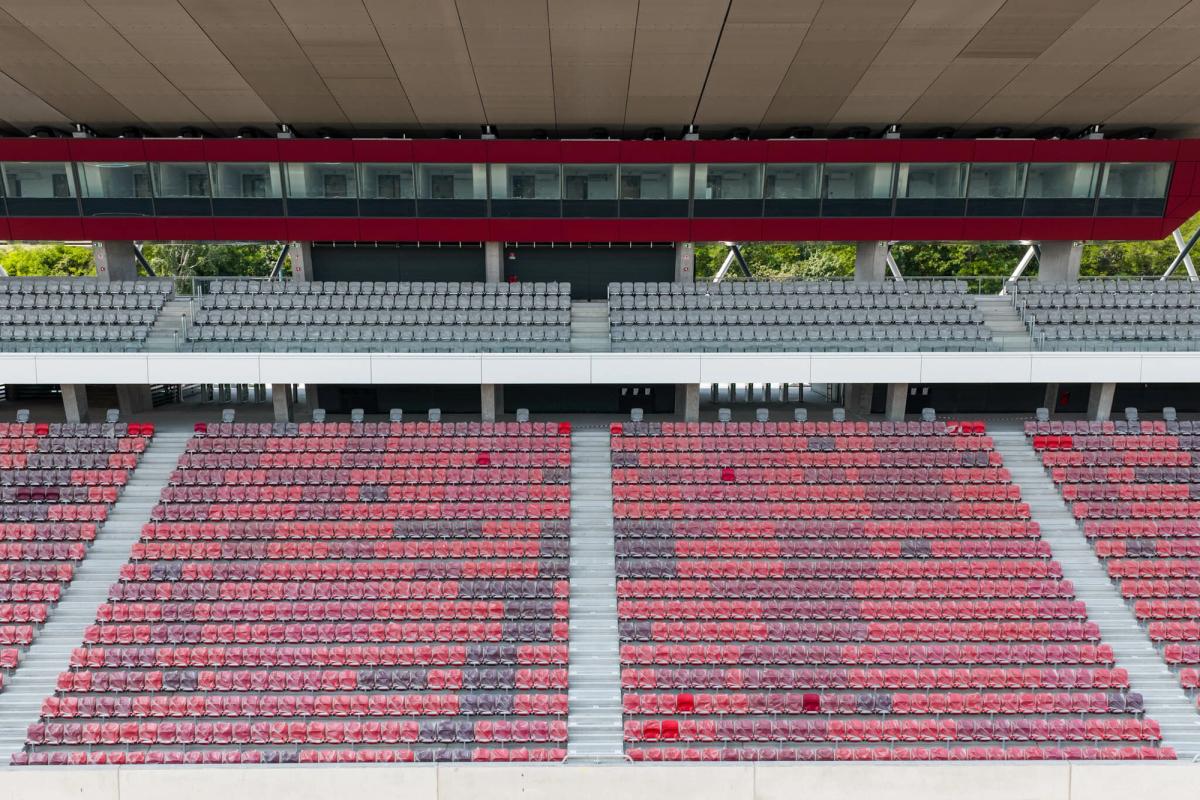
One of the main challenges of the Hungaroring development was the restricted construction programme. The works had to be organised around the racing calendar, within clearly defined periods, while allowing sufficient preparation for upcoming events. Under these conditions, the quality of the detailed design had a direct effect on the speed of construction. The fabrication documentation had to provide clear information on the dimensions, connections, sequence and installation of the components, reducing the need for adjustments on site. Modularity therefore played an important role in bim.GROUP’s work. Repeatable solutions supported faster production and more predictable installation, while individual details were developed for the unique architectural conditions of the project.
Combining visual identity with technical performance
At an international racing circuit, cladding systems are a defining part of the architectural character, but they are also exposed to demanding operational and environmental conditions. They must withstand weather, intensive visitor traffic and the heavy use associated with major sporting events. The task of bim.GROUP was to create a consistent relationship between visual appearance and technical performance. The systems had to provide a precise architectural finish at completion while preserving their quality and structural reliability over the long term.
An internationally recognised transformation
The Hungaroring development also received international recognition for its architectural and design quality. The award highlighted the coherent character of the project and the high standard of its technical implementation. The contribution of bim.GROUP was essential in turning design concepts into structures that could be manufactured and built accurately. The supporting frames, fixings and connections concealed behind the finished cladding are as important to the quality of the renewed Hungaroring as the architectural surfaces experienced by visitors.